
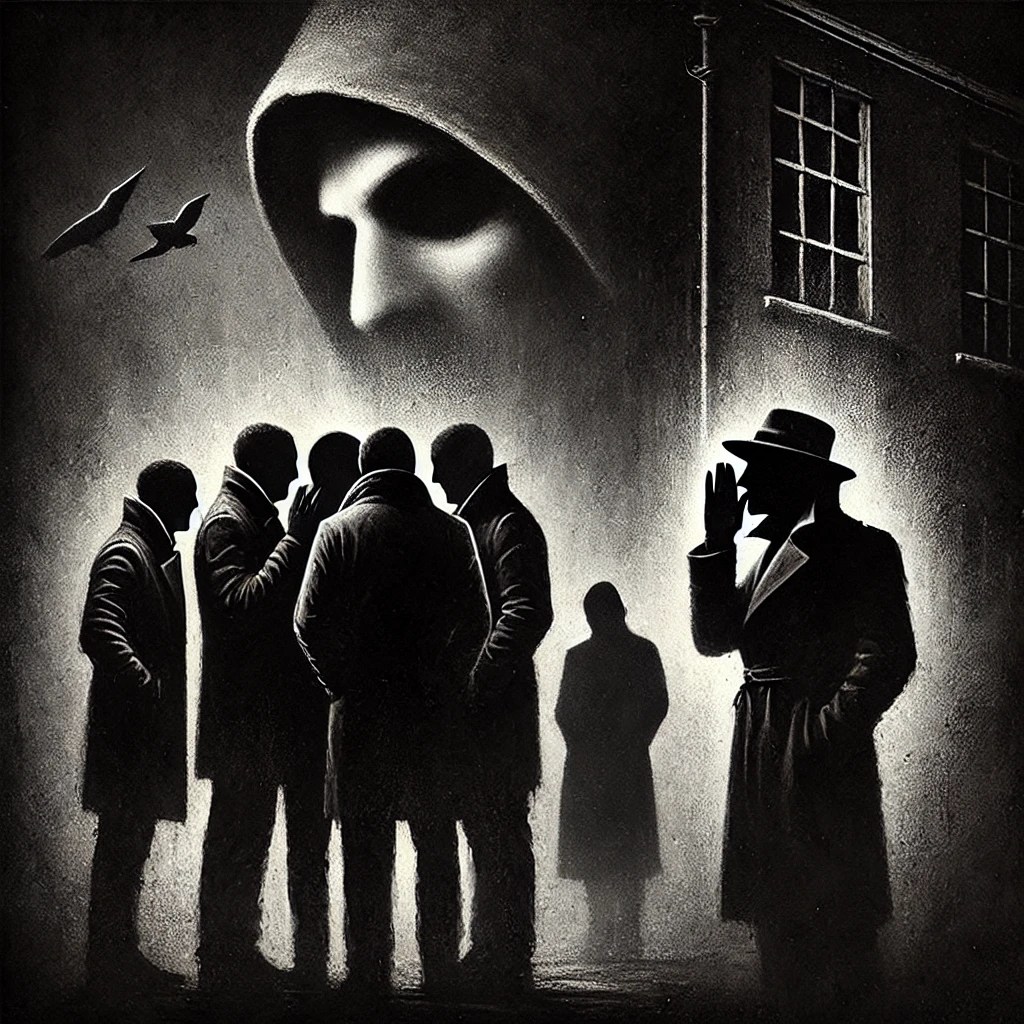
We dwell in a cruel reality, where seldom could one’s benign idiosyncrasies, odd fashion choices, peculiar vernaculars, or unfashionable physique escape the vigilant scrutiny of others. Around us wanders those whose collective inclination toward facile amusement seizes upon the merest whiff of peculiarity with ravenous delight. It’s true! For should an act of the slightest absurdity surface, the certainty of it becoming someone’s relief from boredom that night is incontrovertible. The recipients of an incongruity will voyage into their social realm, sharing the subject’s fragment of strangeness with their circles, associate an innovative comical reference to the event and leave a skewed impression upon individuals hitherto unfamiliar with the unfortunate subject. In such spheres of communal chatter, the perpetrator of these murmurings finds a welcome validation of long-nurtured judgments, and, simultaneously, the victim stands condemned to a near-perpetual condition of subtle reproach and nagging suspicion, marked by stories that never quite fade. And so the wearisome mechanism of gossiping clatters on, nourishing our eternal craving for social commentary while ensuring that the seed of pessimism finds ever-fertile ground.
One might feel just in surmising that only through the meandering corridors of indiscreet whispers does any story truly ever unfold, for indeed, what humanity reveres as history is frequently no more than a compendium of elaborately embellished revelations, with each account tinted by its teller’s subtle affiliations. This richness in personal inclination helps elucidate why many textbooks carry legions of partialities, that and also along with the dizzying array of distinct renditions that cling to any recollection of bygone affairs. Here, it would do us well not to question gossip’s primal significance to societal cohesion, but rather to dissect the underlying currents that animate its corrosive iterations whenever malicious intent rears its head. Here, one is led to contemplate the ordinary architecture of such casual prattle, and to wonder what dark reflection it casts on its practitioners, rather than the hapless individual cast as the central theme of derision.
Essentially, the act is tailored to serve the delivery of an opinion, and it’s precisely on the nature of that opinion where perils could appear and injure the brittle fabric protecting someone’s reputation. The purveyor of such commentary is seldom ignorant of the destructive charge beneath their statements, yet finds themselves powerless against the compulsion to regale their circle with the tale. Following a heartfelt rant, the meddler effectively erects a stark dichotomy, relegating the target to the rank of an alien, an ignoramus who failed to perform judiciously within the gossiper’s acceptable standards of conduct. In the gossiper’s voice, one could effortlessly hear a rascal child boisterously bellowing “This fool violated this and this, and therefore I condemn them. I know better, for I would never perform as outrageously as they did.” The speaker feels insulted and therefore sentences the perpetrator behind the cause to denunciation.
But, for the sake of justice, let’s entertain the loud, shallow humans. Let’s enact the ever foolish act long known as “benefit of the doubt”. Assuming they were indeed in the presence of an offensive behavior, then their feelings might seem justified. Nonetheless, the instant they elected to sidestep immediate confrontation, thereby forgoing any frank elucidation of grievances in the moment of provocation, they contrived a curious paradox. By spurning a civil mechanism through which to articulate displeasure, and instead broadcasting their vexation in the offender’s absence, they reveal the fissure in their rationale. Robbed of the accused party’s own explanation, the gossiper is forced, more so even obliged, to conjure a spurious narrative of motives, one that will, understandably, be fragmented. Certainly, in a world marked by crimes that would flabbergast the devil himself, a guidance to confront any committer of oddity would be simply insane. The idea is to generate a principle, if the account of the doer is absent, then perhaps our tongues should too abstain, in reciprocity, from any vacuous public accounts.
If, however, one elects to transcend that principle, they are ought to learn that the insatiable urge to castigate the eccentricities of others stems not simply from a casual ignorance of one’s own peculiarities, but rather from a deeper blindness to the inevitability of reciprocity in human judgment. This tendency betrays a clandestine form of arrogance, for in assailing the oddities of one’s peers, the gossiper tacitly elevates their own conduct to a plane of presumed faultlessness, as though their taste, comportment, and convictions were beyond reproach. Yet such hubris conveniently disregards the unrelenting march of time, which, with impartial fairness, eventually exposes everyone to a taste of the very scorn they once generated.
What thus surfaces is a grim mirror held up to those whose tongue so freely enumerates the defects of others. Whilst they bask in the transittory gratification of ridicule, they seldom foresee the storm that awaits them when they stand in the crosshairs of a similarly merciless narrative.
Ultimately, gossip is inspired by the imagination that there exists only a particular segment of people who can be irrational, old-fashioned, awkward, or possess the capacity to commit regrettable actions. The gossipmonger commits the gravest error known to our kind, and that’s the cessation of all curiosity about the commonality of human frailty. In failing to draw the faintest link between the “offensive” behavior at hand and the universal capacity for imperfection, they ensnare themselves in a kind of grandiose self-exemption that mocks the truth of our shared humanity.
Gossipers suppress the candor of life’s most magnanimous quality, and it’s that all souls bear the imprints of their own miscalculations, and that, frankly, our collective nature is predisposed to error. Imperfection, in truth, is the pervasive state into which every mortal is born and not only to the unlucky few whose imperfect nature happened to be caught by those watching.
 Dr.MOG
Leave a comment